

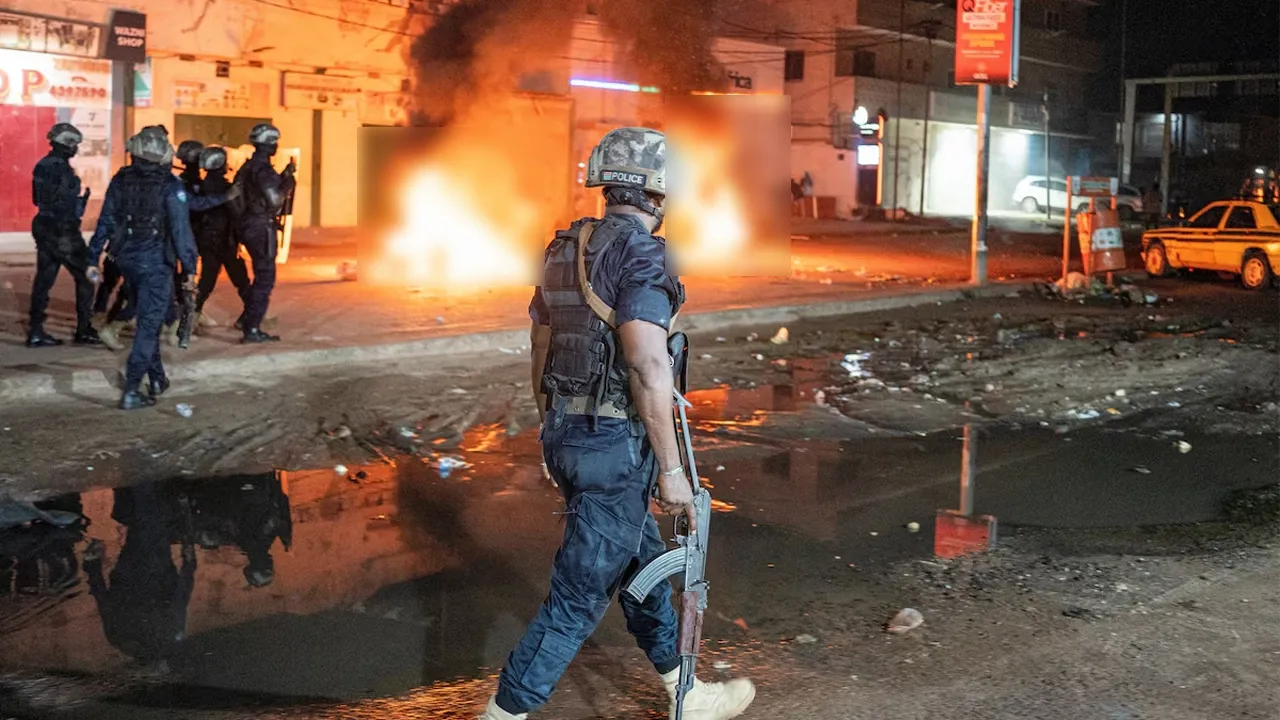

On Monday and Tuesday, protesters barricaded various roads and halted traffic. They set tires on fire and chanted slogans demanding the resignation of President Adama Barrow. Police used tear gas in several areas to bring the situation under control.

Protests also took place near the President's residence and the headquarters of the country's electricity provider, the National Water and Electricity Corporation.

Describing the electricity crisis as an “emergency” and a “matter of national security”, President Barrow said a 24 MW power generation machine would be installed by the end of October. In addition, work on building a 50 MW solar power plant will also begin soon.
Gambia is currently in the hot season. Because of rotating power outages in various areas, some places are without electricity for up to 48 consecutive hours. This is increasing public suffering and anger.

Gallo, managing director of the electricity provider, cited climate change and increased electricity demand due to excessive temperatures as one of the reasons for the crisis. He also mentioned the impact of the US-Israel war involving Iran.

Ahead of the presidential election in December, the electricity crisis has put new pressure on President Barrow's government. He is contesting the election for a third term.
Source: Al Jazeera