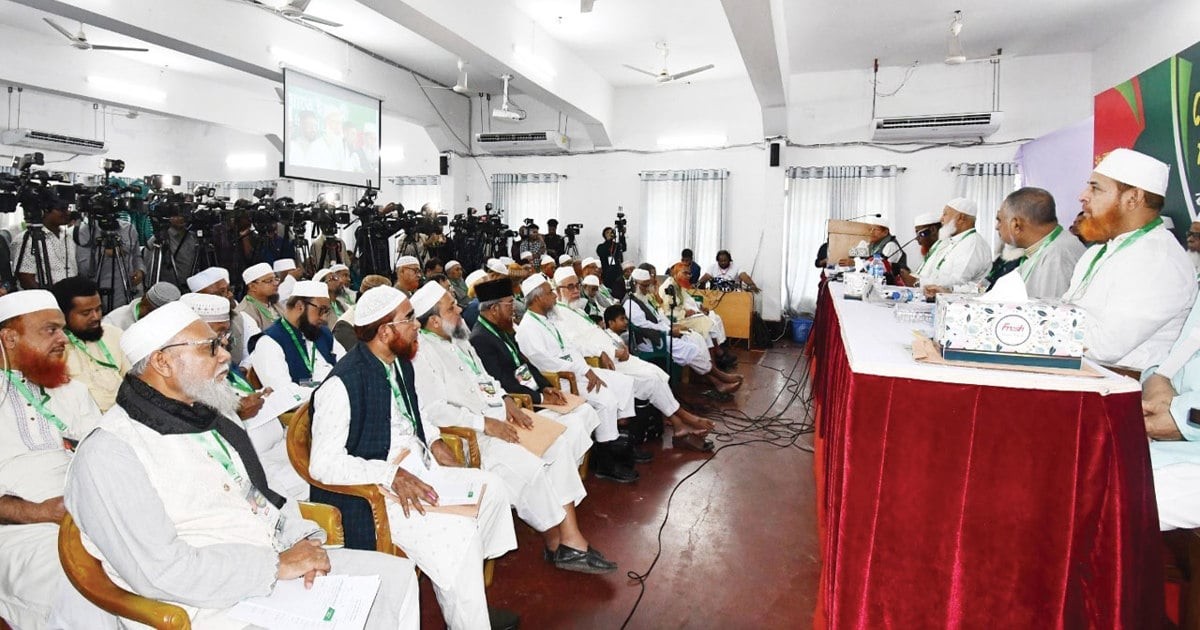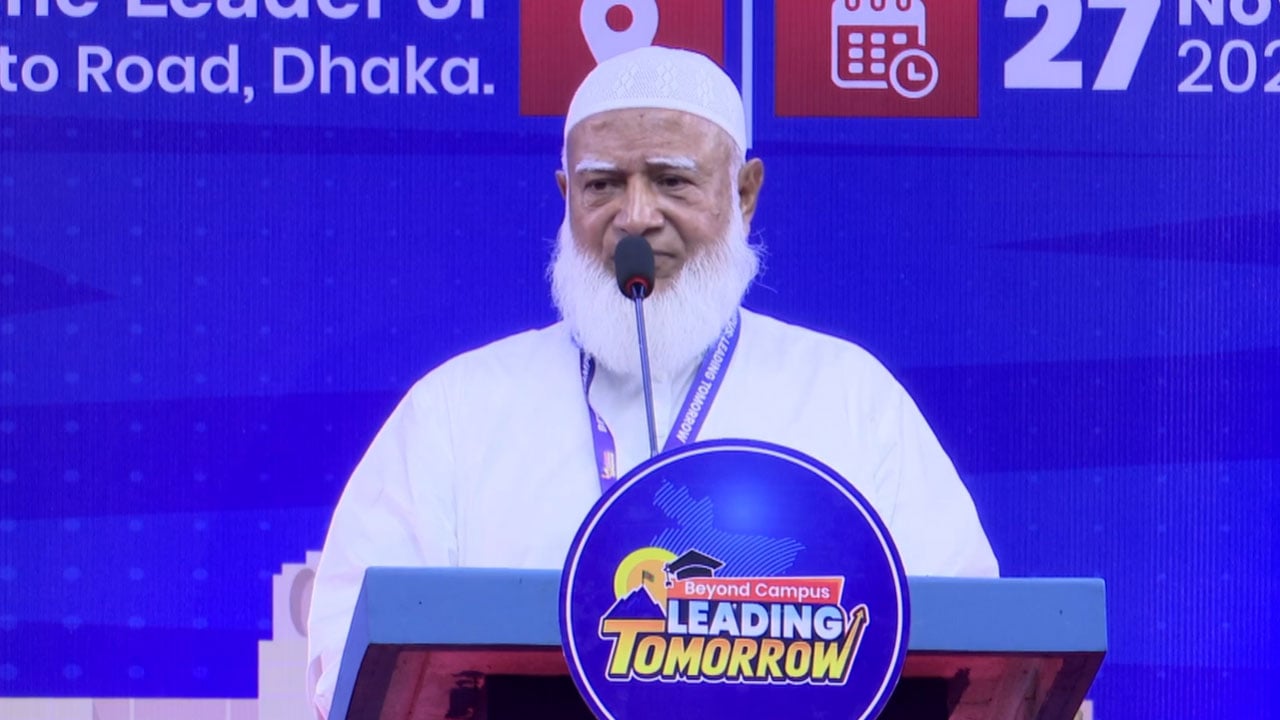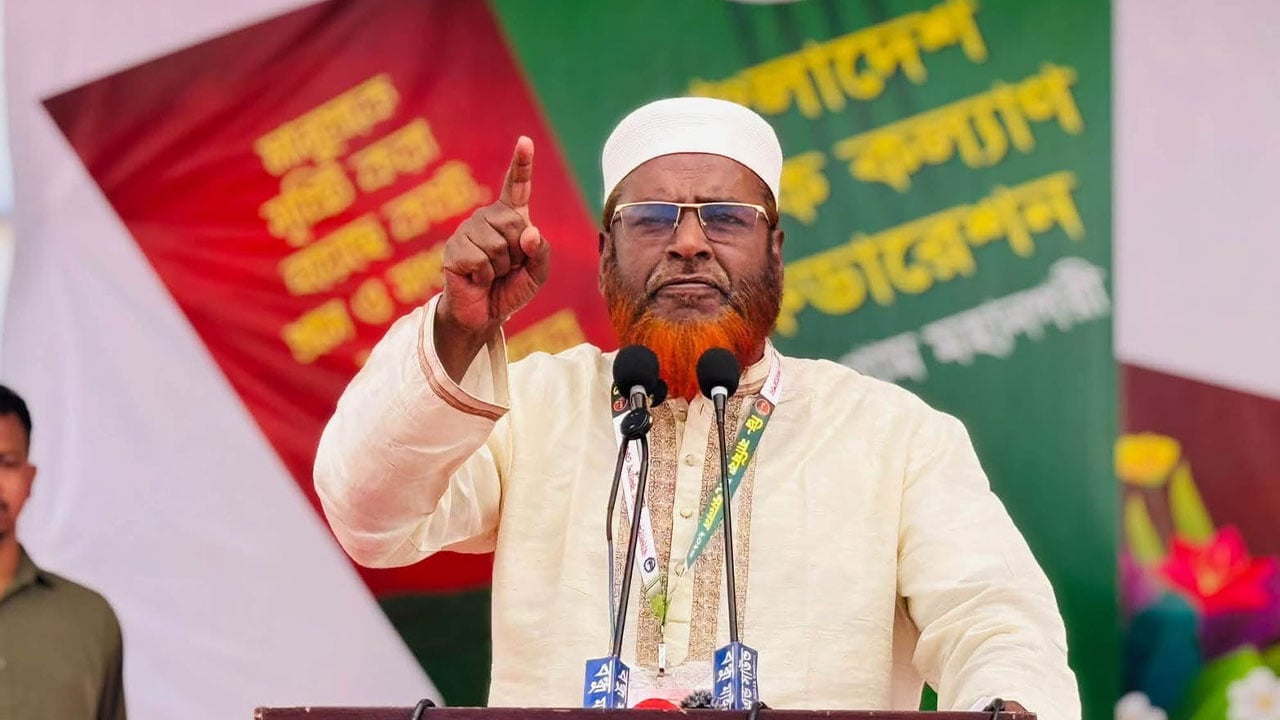


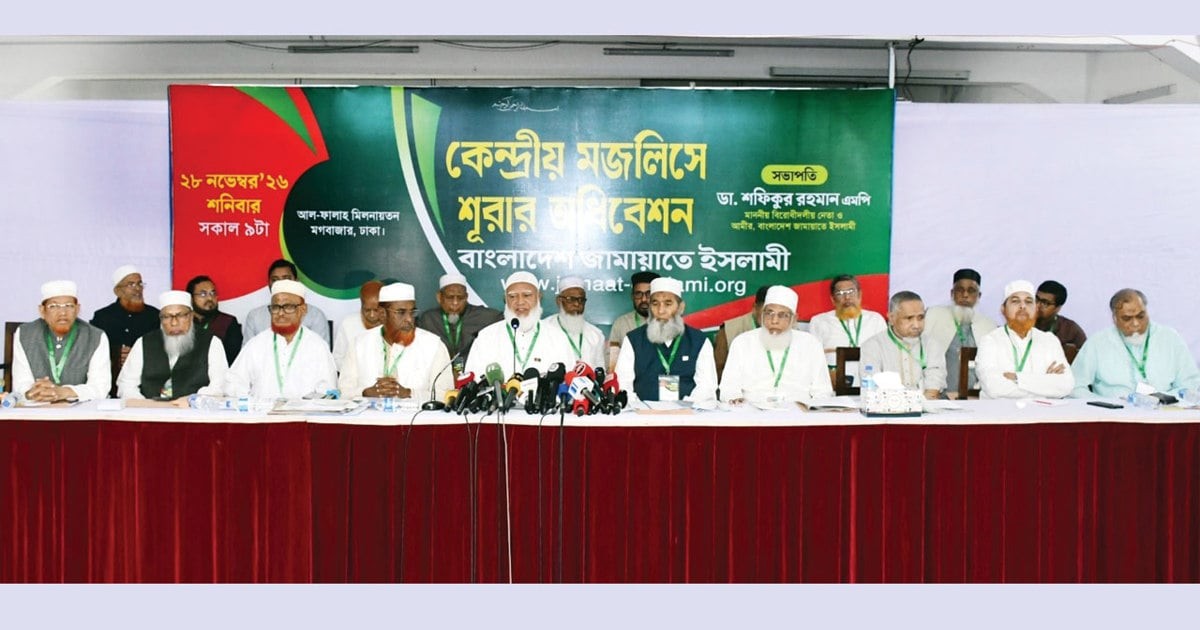

Jamaat Ameer said the people of the country did not protest only to change the government. They took part in the mass uprising with the expectation of fundamental changes in the state’s governance policy, structure and political culture. It was to fulfill that expectation that the election to form the government and the referendum to change the state structure were held. Before the election, political parties had agreed on accepting the referendum verdict and implementing the July Charter. But he alleged that from the day after the election, the government moved away from that position.

He alleged that instead of implementing the public verdict, the government has taken an initiative to form a new committee to amend the constitution. Yet during the interim period, under the National Consensus Commission, 37 political organizations and various sides held discussions on the matter for seven consecutive months. He believes reforms should be advanced on the basis of the opinions and decisions produced in those discussions. The Jamaat Ameer also said there is no need to form a new committee.

Highlighting the difference between constitutional amendment and state reform, he said reforms can bring changes to the state structure according to the people’s aspirations. But decisions taken through constitutional amendment can be challenged in court. Jamaat does not want any new conflict or ambiguity to be created between parliament and the courts. That is why the party has been demanding implementation of reforms according to the referendum verdict.
Dr. Shafiqur Rahman called for strengthening the foundation of national consensus without further delay in implementing the people’s mandate. He said that if the referendum verdict is implemented, there will be an opportunity to rebuild the unity that political parties and the people showed in the 2024 mass uprising. However, if initiatives for dialogue or unity are taken while bypassing the main demands, they will not last long. On the contrary, the fascist forces of the past may try to return to politics by taking advantage of it.

The Jamaat Ameer also criticized BNP’s political position. He said that although promises were made not to return to past politics, partisanship is now increasing in various areas. Raising allegations of appointments and removals of vice-chancellors, pro-vice-chancellors, proctors and other important posts in educational institutions on the basis of political loyalty, he said it is essential to keep the education system free from party influence. If educational institutions are not run on the basis of merit and competence, the future generation will suffer.

He further said that one of the aspirations of the mass uprising was a merit-based society where competence and skills, not party identity, would be the criterion for evaluation. But the tendency to exert political influence in various areas is becoming an obstacle to that expectation. He mentioned that Jamaat has objected to this inside and outside parliament.
Expressing concern over the law and order situation, Dr. Shafiqur Rahman said public life has become unstable due to extortion, occupation and commission trading, killings, drugs and the activities of juvenile gangs. In particular, people’s concern over the safety of women and children is increasing. He remarked that visible and effective steps by the government are needed to prevent drug sales around educational institutions and the spread of drug addiction among the youth.
Regarding Prime Minister Tarique Rahman’s call for national unity, the Jamaat Ameer said Jamaat does not want to sit in dialogue with any party interest. The party will participate in discussions on public-interest issues such as restoring the people’s lost rights, cleaning up the political and social environment, and freeing educational institutions from party influence. To build unity against fascism and hegemony, its foundation must be the implementation of the people’s rights and the aspirations of the mass uprising.
He also criticized the government over rising commodity prices and the cost of living. In his words, the pressure of daily essential expenses, including gas and electricity price hikes, is increasing on ordinary people. He said the current government must take a responsible role instead of blaming only past governments or the international situation for these problems.
Raising the issue of threatening statements by a neighboring country about Bangladesh, the Jamaat Ameer also questioned the government’s position. He said Bangladesh wants to maintain friendly relations with its neighbors, but friendship depends on mutual respect and behavior. The government must take a clear position on the country’s independence, sovereignty, borders and the safety of the people. In this regard, he emphasized the combined role of the armed forces and ordinary people.
Calling on the people to remain aware in protecting the country’s independence and sovereignty, he said it is not possible for any single force alone to ensure the country’s security. Borders and people’s lives, property and rights must be protected through the combined efforts of state forces and the people.
Dr. Shafiqur Rahman also stressed the importance of presenting and discussing foreign agreements in parliament. He said international agreements are not just the government’s matter; the country’s future and the people’s interests are involved with them. The people have the right to know what Bangladesh is gaining and what it is giving up in any agreement. Therefore, proper discussion and accountability in parliament must be ensured on these matters.
Calling on the new generation to come forward in building the state, he said in his speech that past divisions and conflicts should be left behind and attention should be focused on building the future. Work must be done with the aim of building a humane, just and equitable Bangladesh by bringing the young and youth community into leadership.