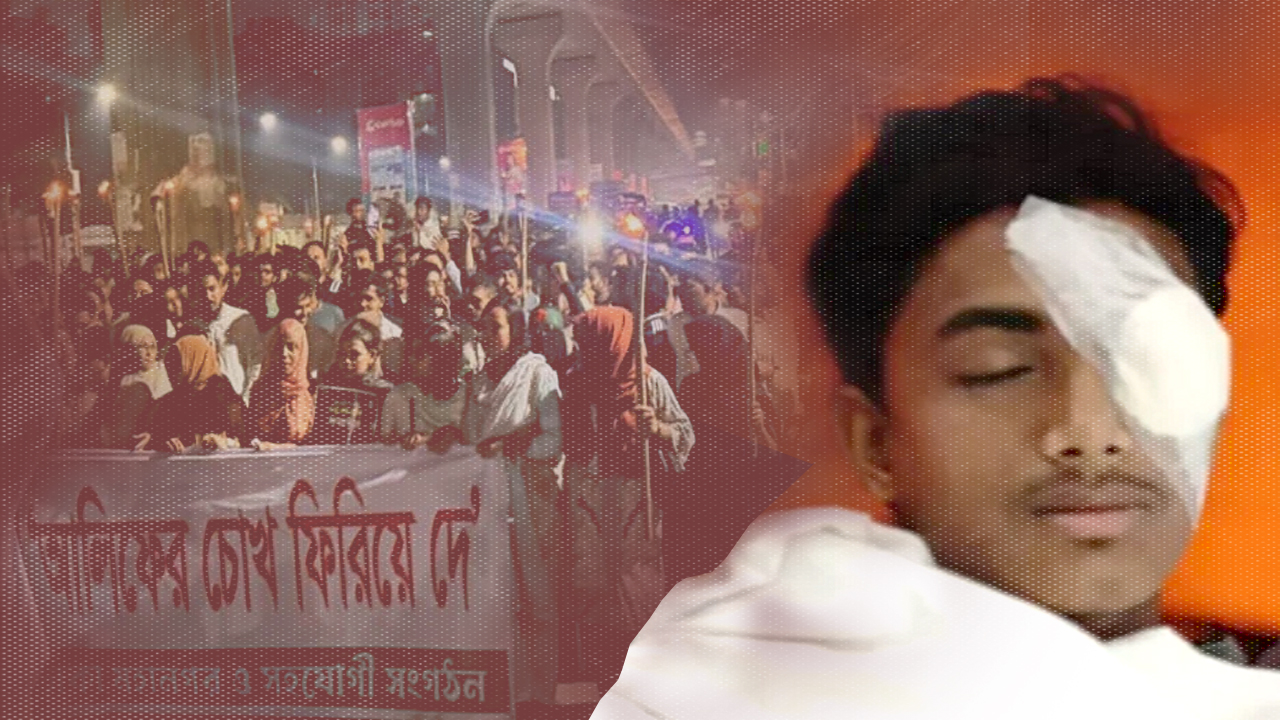

August 5 is a unique day in Bangladesh's history. On this day in '24, the student-public movement culminated in a mass uprising. The authoritarian, fascist regime came to an end. The door to the possibilities of a new Bangladesh was thrown open. But history does not stop at writing tales of victory; it also tests what follows victory. So, on the second anniversary of August 5, the most urgent question is: after the victory of August, what then? This question is in no way meant to diminish the achievements of the July Uprising; rather, it is the opposite. It is precisely to honor the sacrifices of those who stood on the streets, gave their lives, and bled, that this question must be asked.
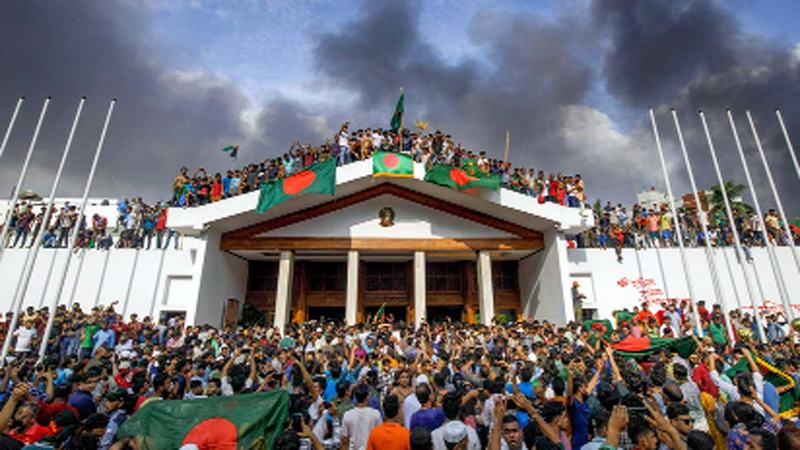
August 5 brought down the fascist Hasina. But was a change of government the sole objective of the mass uprising? On the streets of July, the people did not merely want the departure of one fascist ruler. They wanted a fear-free Bangladesh. They wanted the right to vote, the rule of law, and freedom of expression. They wanted a corruption-free administration and an accountable state.
In other words, the struggle of July was not just about a transfer of power. It was about transforming the character of the state. And here lies the greatest challenge after August 5. The fall of a fascist system can happen quickly. But breaking the political culture of that system is difficult. Building a new culture is even harder. Authoritarianism does not reside only in one person. It lives in institutions, in the administration, in law enforcement agencies, and in political culture. So the departure of one ruler does not mean the final departure of authoritarianism.
Who holds power is important. But more important than that is—how is power being used? Are we returning to the old culture? Are we again using state institutions for political interests? Have we begun to see dissent as enmity?
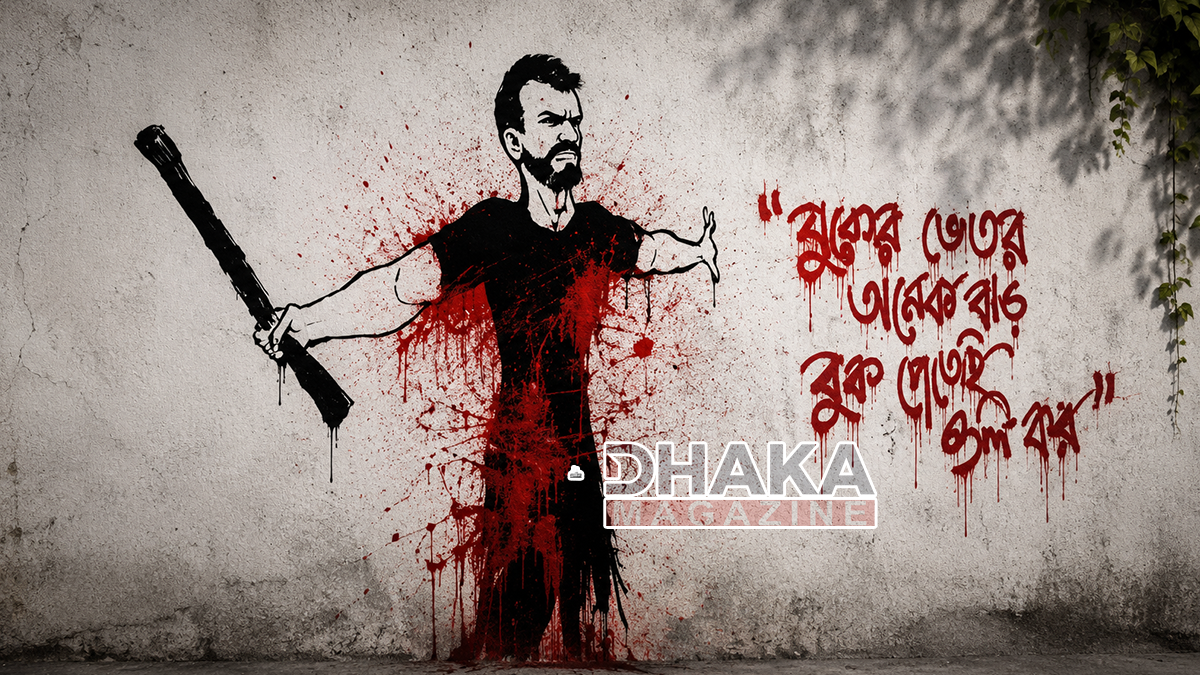
These questions are uncomfortable. But they are necessary. Because the July Uprising is not the property of any single party. It is the uprising of the masses. Another great force was the younger generation. They have shown that attempts to keep young people away from politics cannot last forever. When the state creates a distance from the dreams of the youth, that distance eventually explodes. The image of Shaheed Abu Saeed standing fearlessly with his chest bared will remain an unparalleled symbol of resistance not only in Bangladesh's history but also in the political history of the world. Countless young people and ordinary citizens like him turned July into a mass uprising through their sacrifices.
How will this debt of blood be repaid? Not merely by building monuments or observing commemorative days. To repay the debt of blood, we must build a Bangladesh where no Abu Saeed will ever have to stand against injustice with his chest bared again.
Justice is a major issue here. The July massacres must be tried. But that trial must be conducted through a transparent process. If justice turns into vengeance, the July aspiration for justice will be damaged. Similarly, reforms must also be realistic. The electoral system, administration, police, judiciary, anti-corruption efforts, and media—each vital institution of the state—must be made free from political influence and accountable. This is not easy. But after July, Bangladesh does not have the luxury of choosing the easy path either.
Democracy must also be addressed. Without the right to vote, democracy is incomplete. But democracy is not established by voting alone. Even after elections, democracy must be practiced every day. Opposition views must be respected. The media must be allowed to work freely. Before July, we saw the horrific consequences of power centralization. That experience must not be forgotten.
July has taught us another lesson: no government can remain safe by neglecting its people. When the economy falters, people feel its effects. When unemployment rises, young people become frustrated. When commodity prices soar, ordinary people's lives become difficult. When corruption increases, trust in the state erodes. When discrimination persists in administration, public anger accumulates. These are not just economic problems; they are political too. Because people's trust in the state is built on their everyday experiences as citizens.
So, after July, the biggest task before Bangladesh is to restore that trust. The state must prove that power is for the people, not the people for power. Politicians must also change themselves. If the political culture that had disappointed people before July is repeated, then the victory of August 5 will remain incomplete. Politics must be freed from occupation, extortion, muscle power, vengeance, corruption, and partisanship.
Many have become entangled in these practices. We all recognize them. Will there be no accountability for them? Will it be easy for them to do as they please? The July Uprising sends a different message. The message is: this will not be tolerated. It will not be allowed to continue.
On August 5, Bangladesh saw the mighty flee the country. If those in power forget the history of why they fled, then the consequences are well known to everyone.
The politics that is for the people—that is the politics of July. The politics that uses people for power—that is not the politics of July. For this reason, it would be wrong to view August 5 merely as a Victory Day. It is also a warning. A warning for everyone in power.
The July Uprising has taught us that underestimating the power of the people is a grave mistake. Two years later, therefore, we are faced not only with a time for celebration but also for introspection. What have we gained? What have we not? Where have we progressed? Where have we regressed? Where has the dream of July been realized? And where have we ourselves shrunk that dream? Avoiding these questions would be an injustice to July.
The victory of August 5 was the opening of a door. Which Bangladesh we enter through that door is now the real question. For those who stood with the July Uprising, the answer is clear. To complete the victory of August 5, we must establish a Bangladesh for its people. A Bangladesh where the state does not intimidate anyone, but rather provides security to its citizens. A Bangladesh where even the powerful are not above the law.
An important context: If the aspirations of July are not realized, then the question will arise—for whom were they not fulfilled, and for whose benefit were they sidelined? If anyone is found responsible, they must bear the consequences. There will be no leniency. Why is the July Charter not being implemented? Who is opposing it? One does not need to be a political expert to find the answers. Everyone sees it, everyone knows it. Those responsible will not get off easily—the reckoning is not that simple.
Today, the most urgent question must be asked again: On August 5, we achieved victory. But have we been able to build the Bangladesh of that victory? If the answer is not a complete 'yes,' there is no reason to despair. Because a mass uprising is not just a single day. It is an ongoing responsibility. August 5, 2024, was its beginning—not its end.
Author: Former General Secretary, Dhaka Union of Journalists